PSA Europe 2026: What Changes for Pokémon Collectors?
 Pokefolio
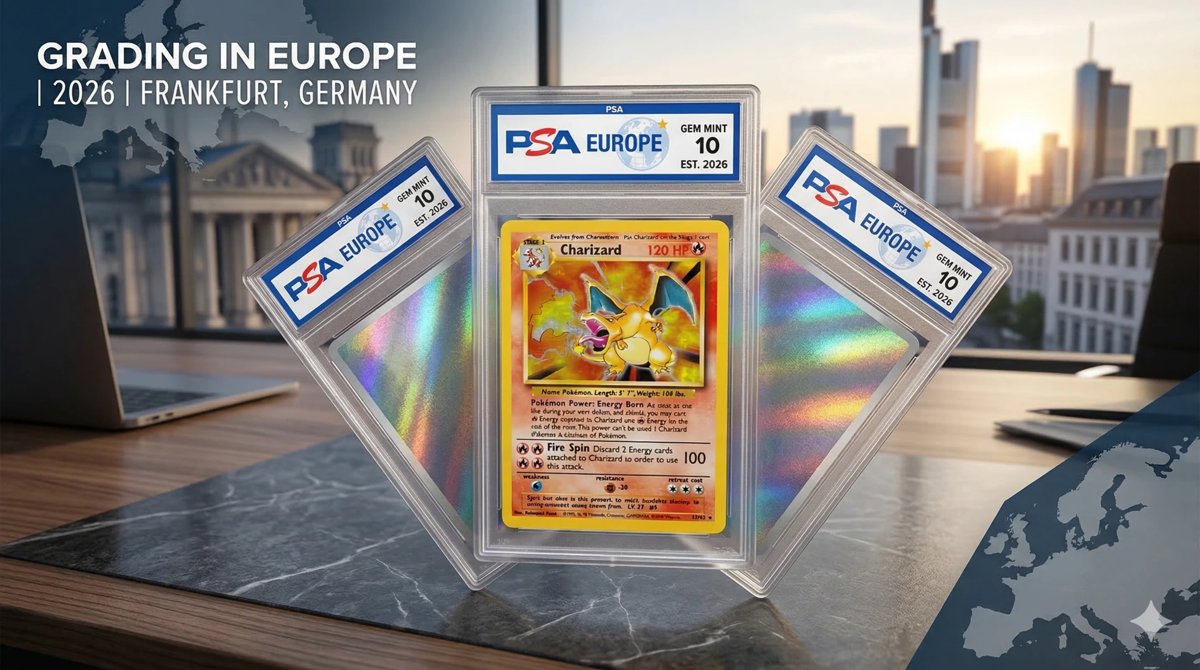
Discover how PSA Europe 2026 and the new PSA Germany grading facility will eliminate customs fees and revolutionize how you grade Pokémon cards Europe.
PSA in Europe (2026): The Game-Changer for Local Collectors
For decades, the "Holy Grail" of Pokémon card grading has been locked behind a literal ocean.
European collectors seeking the prestige of a PSA 10 gem mint grade have been forced to navigate a gauntlet of international shipping, complex customs paperwork, and the anxiety of their most valuable assets sitting in cargo holds for thousands of miles. The year 2026 marks the definitive end of this "US-centric" era. With the official opening of a full-scale PSA Germany grading facility in Frankfurt, the hobby landscape is shifting. Historically, submitting a card from Paris, Berlin, or Madrid meant higher costs and months of waiting. This 2026 revolution brings the global giant directly to the European doorstep, fundamentally changing the math for every hobbyist and their TCG Collection Management in the region.
1. The 4 Major Changes for European Collectors
The transition to a localized grading operation isn't just about convenience; it is a financial and logistical overhaul that removes the biggest barriers to entry for hobbyists. Here are the four pillars of the PSA Europe 2026 rollout:
Change 1: The End of Customs Fees & Import VAT (The Biggest Win)
Do I have to pay customs fees for PSA grading in Europe? In previous years, the "hidden cost" of grading was the return journey. When cards were shipped back from the US, collectors were often hit with PSA customs fees Europe that felt like a second tax. Because the cards were technically "re-entering" the EU after a service, customs agents frequently applied import VAT (often 20% or more) based on the card's graded value. A €1,000 Charizard could result in a €200 surprise bill at the front door. By grading within the EU, these cross-border taxes are eliminated, making the final price transparent and predictable.
Change 2: Plunging Shipping Costs
How to send cards to PSA from Europe in 2026? Sending a small parcel across the Atlantic via FedEx or DHL with high-level insurance is a major expense, often costing €100 or more just for the transit. With the new central hub in Frankfurt, shipping costs are plummeting. Domestic or intra-EU shipping rates are a fraction of transatlantic prices, allowing collectors to allocate their budget to more grading slots rather than to logistics.
Change 3: Faster Turnaround Times & No Middleman
Until now, most collectors relied on a "middleman" service to group orders and save on bulk shipping. While helpful, these services added weeks to the process. How long does PSA Europe take to grade cards? While official timelines vary by service level, removing 10,000 miles of transit means collectors can expect their cards back weeks sooner. Can I submit directly to PSA from France/Germany/Italy? The ability to submit directly to PSA from France/Germany/Italy without a third party simplifies the chain of custody.
Change 4: Reduced Risk of Loss/Damage
Every time a Pokémon package changes planes or passes through an international sorting center, the risk of damage or loss increases. A localized facility means fewer touchpoints and shorter distances. For a collector holding a "one-of-a-kind" vintage card, the peace of mind that comes with a shorter, local journey is invaluable.
2. The Market Impact: What Happens to European Competitors?
The arrival of a local PSA facility creates a significant "Ripple Effect" across the European grading industry. For years, regional companies have thrived by offering what PSA couldn't: accessibility and low cost.
The Squeeze on Local Graders: European companies like PCA (France), AiGrading (Italy), and Pure Grading (UK/Europe) built their loyal followings by being the "easy" alternative to the US nightmare. Now that the PSA vs PCA Europe 2026 market is a level playing field in terms of logistics, these local companies are feeling the squeeze. PSA's brand power is immense, and for many, if the price and effort are equal, they will choose the "red label" for its global resale dominance.
The Upside for Consumers: This competition is a massive win for collectors. To survive, local companies are being forced to innovate faster than ever. We are seeing Pure Grading’s AI tech become more sophisticated and pricing structures becoming more aggressive. This "grading war" ensures that European collectors get better technology, higher security, and lower prices across the board as companies fight to remain relevant against the PSA juggernaut.
3. The Verdict: Should You Hold Your Cards for Now?
With the facility opening in 2026, many collectors are wondering whether to ship their "raw" cards now or wait.
The Case for Waiting: If you are holding high-value vintage cards (Base Set Charizards, Gold Stars) or "chase" modern cards like Evolving Skies Umbreons, it is highly recommended to wait until the European facility is fully operational. The savings on PSA customs fees Europe and the reduced transit risk make it the logical choice for high-end "slabs" intended for a permanent collection or maximum profit flip.
The Case for Moving Now: If you have cards you want to "flip" during the current market cycle, or if you just want basic encapsulation for a binder collection today, local alternatives like PCA or Pure Grading remain excellent, valid choices. They still offer beautiful cases and professional standards without the 2026 waitlist.
"The End of Pokémon grading middlemen Europe is here."
Whether you are a "Data Nerd" or a "Hardcore Investor," the localization of PSA in Germany is the most significant event in the European hobby since the release of the TCG.
FAQ: Navigating the New Era - PSA Europe 2026
When does the PSA European facility open? The full-scale facility in Frankfurt, Germany, is scheduled to begin on-site grading operations in the summer of 2026.
Is it cheaper to grade with PSA Europe? While the base grading fees are expected to align with US pricing, the total "landed cost" will be significantly lower due to the absence of import duties and lower shipping costs.
Will PSA Europe be cheaper than US? Effectively, yes. Even if the service fee is identical, the elimination of a 20% VAT on the returned value makes it the most cost-effective way to get a PSA label in history.
Will PCA survive PSA coming to Europe? Most experts believe so. PCA’s focus on aesthetics and UV protection caters to a different niche than PSA’s "investor-first" market.



What a game changing move!