The Best Binder for Pokémon Cards (Side vs. Top Loading)
 Pokefolio
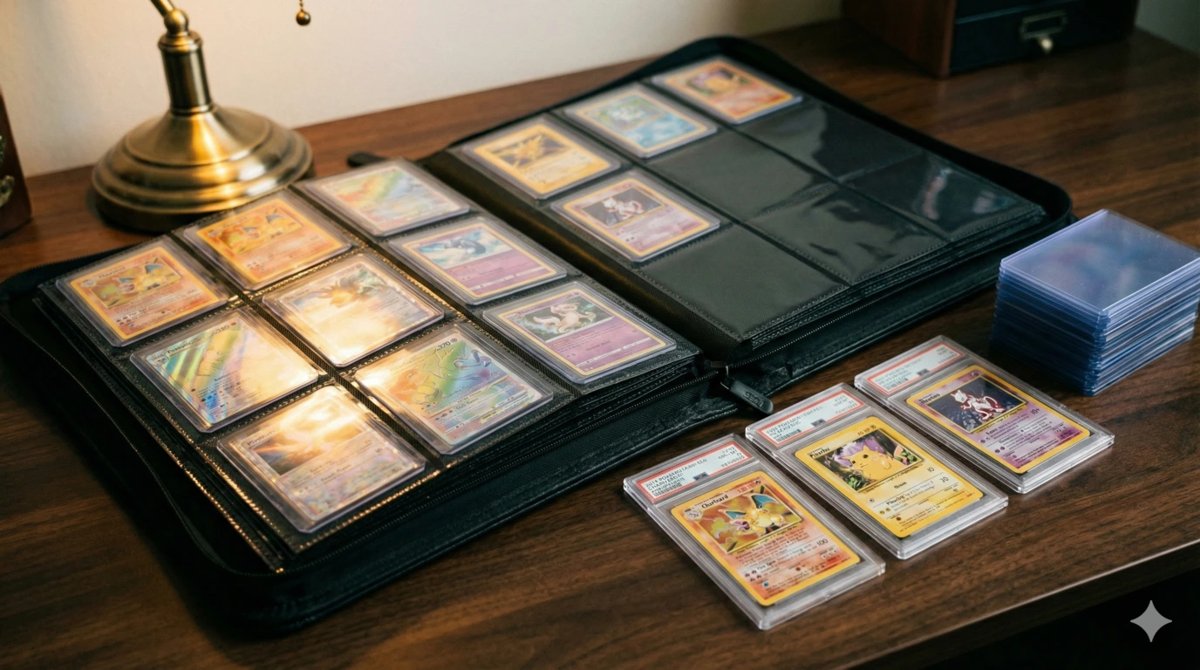
For professional Pokémon collectors in Europe aiming to protect and showcase their investments, hardware storage choices matter just as much as the cards themselves.
From binders and pockets to rigid top loaders, every option has advantages and risks. The guide will explain whether ring binders provide security and which binder type is best for Pokémon cards according to our research. A binder seems like a simple solution for card organization, but not all binders are created equal. The wrong style can lead to pressure marks, bends, and even the dreaded "Binder Ding" on your precious cards. This happens when a binder's ring system presses against cards, or pages shift and rub over time, especially if cards aren't properly sleeved first, as explained in The Best Pokémon Card Sleeves Guide (Penny, Matte, & Double).
The Binder Danger: Are Ring Binders Safe for Pokémon Cards?
The Short Answer: Not Ideal
"A 'Binder Ding' is a small dent or crease along the edges of a Pokémon card caused by improper storage next to binder rings."
It may start small, but it permanently lowers condition and value, especially on rare or foil cards.
Why are O-ring binders bad for trading cards?
Many casual collectors start with old school style binders, the ones with round metal rings (often called "O-ring binders"). But are ring binders safe? Unfortunately, they often are not the best choice for long-term card storage. Round ring binders can cause cards near the spine to press into the rings or pages, leading to indentation or bending over time; a type of damage collectors call a binder ding.
O-ring binders (named for their circular rings) create gaps where pages can slip underneath. When that happens, cards get pinched or pressed against the metal, eventually causing:
- Edge dents
- Bent corners
- Scratches to the surface
- Warping from pressure over time
Is a D-Ring Binder Better Than an O-Ring Binder?
Yes, D-ring binders are generally better than traditional O-ring binders. Here's why:
- Even page distribution: D-rings hold pages flatter and more evenly, reducing pressure on individual cards.
- Reduced risk of cards creeping under rings: The flatter shape minimizes bending and uneven movement.
However, they still involve rings and can occasionally create subtle pressure if overfilled, so many collectors prefer ringless or zip binders for the best long-term protection.
What is the best binder for Pokémon cards in 2026?
The short answer: side-loading, ringless zip binders with acid-free pages. These provide superb protection without metal rings pressing against your collection.
Top Recommended Styles
- Zippered side-loading binders: pages don't shift, and cards stay in place even when the binder is flipped.
- High-capacity zip binders: ideal if your collection is expanding. Some European options hold over 900 to 1200 cards, depending on pocket count.
- Toploader binders (specific pages sized for rigid top loaders): perfect for high-value cards you don't want to rely solely on soft sleeves.
Side-Loading vs. Top-Loading Pages
When evaluating binders, you'll also see two common pocket styles: side-loading and top-loading. However, side-loading pages are generally safer for everyday use, while top-loading can be handy for quick access, but you need to be careful when the binder is moved.
Side-Loading Pages
- Cards are inserted horizontally from the side.
- Hold cards securely even when flipped upside-down.
- Great for regular collection, use, and display.
Top-Loading Pages
- Cards are inserted vertically from the top.
- Easier to insert and remove, but it can let cards slip out if the binder is tipped.
Toploaders & Toploader Binders
For collectors wondering how to store expensive Pokémon cards safely, toploaders are the go-to solution. The rigid plastic holders deliver maximum protection for high-value cards, which have a value of €20 or more, because they shield the cards from bends and scratches and the dangerous binder ding. The top loaders block all pressure marks, which makes them necessary for anyone who wants to submit cards for grading or needs to store them for extended periods.
For serious collectors asking, are ring binders safe for Pokémon cards?, the answer is nuanced: traditional O-ring binders can still create pressure and edge dents even when cards are sleeved. Using toploaders mitigates this risk entirely, ensuring that your investment-grade cards stay pristine. A growing trend in Europe is the Toploader binder Europe - binders specifically designed to hold rigid top loaders. These binders combine the accessibility of a traditional binder with ultimate protection, eliminating risks associated with O-ring binders.
When deciding what is the best binder for Pokémon cards? collectors increasingly favor these binders because they:
- Keep top-loaded cards secure without touching metal rings
- Protect against binder dings and warping
- Allow for organized storage without compromising card condition
Whether you have a small collection or are asking how many cards a Pokémon binder holds? Top-loader binders are ideal for high-value cards, offering peace of mind while keeping your collection display-ready.
How to Stock a Binder Properly (Without Damaging Cards)
Pokémon card binders will damage cards when users load them with incorrect storage methods. The correct loading method prevents three types of card damage, which include pressure marks, page warping, and long-term stress damage.
It's much safer to use sleeves to protect cards before you place them into binder pockets. Standard binders require only a penny sleeve or matte sleeve, but double-sleeving protects higher-value cards better. You should slide cards into the pocket gently while you keep the pocket opening from bending.
You must distribute cards throughout the binder instead of starting to fill pages at the spine. Early page overloads create pressure that causes edge dents to appear because ring binders distribute weight across their entire structure. The manufacturer of the page must provide explicit instructions before you are allowed to place more than one card in each pocket.
Additionally, you should display binders in an upright position, which resembles book storage instead of flat stacked storage. Vertical storage prevents page sagging and reduces long-term pressure on lower cards, helping your collection stay flat, aligned, and display-ready.
Final Takeaway: Best Practices for Binder Storage
How to store expensive Pokémon cards safely? Proper hardware equipment allows your Pokémon card collection to remain protected and organized until you choose to display, trade, or invest in your collection.
- Avoid cheap O-ring binders; they are often not safe for Pokémon cards long-term.
- D-ring binders are better, but still risk pressure if overfilled.
- Side-loading, zippered binders with archival pages are the safest choice for big collections.
- Toploader binders offer next-level protection for valuable cards and graded slabs.
How many cards can a Pokémon binder hold? It depends on the binder and pocket layout:
- Standard 9-pocket binder: 360 cards
- 12-pocket binder: 912 cards
- 16-pocket binder: 1,200+ cards
- Toploader binders: 250-400 cards, depending on pocket size.