Calculate Pokémon Card Profit (And Avoid the "eBay Trap")
 Pokefolio
Learn how to calculate Pokémon card profit using a Pokémon card value checker, avoid the eBay trap, shipping factor, and customs, and track real ROI accurately.
If you’re serious about buying Pokémon cards, investing, or simply understanding your collection’s real value, you need to go beyond hype prices and guesswork. Many beginners overestimate their cards because they rely on listings instead of real sales, while investors often forget hidden costs like shipping or customs. This article explains how to use a Pokémon card value checker, how to calculate Pokémon card profit, and how to avoid the most common mistakes collectors make when tracking Real ROI Pokémon cards.
1. The “eBay Trap” (Listing Price vs. Sold Price)
● The Problem
A beginner searches for his Charizard card online. He finds one listed for €500 and immediately assumes: What is the real value of a Charizard? Mine must be worth €500!
● The Reality
How to check Pokémon card value? To analyze Sold Listings and completed auction data! That listing might have been sitting unsold for months. Real market value comes from completed transactions, not wishful thinking.
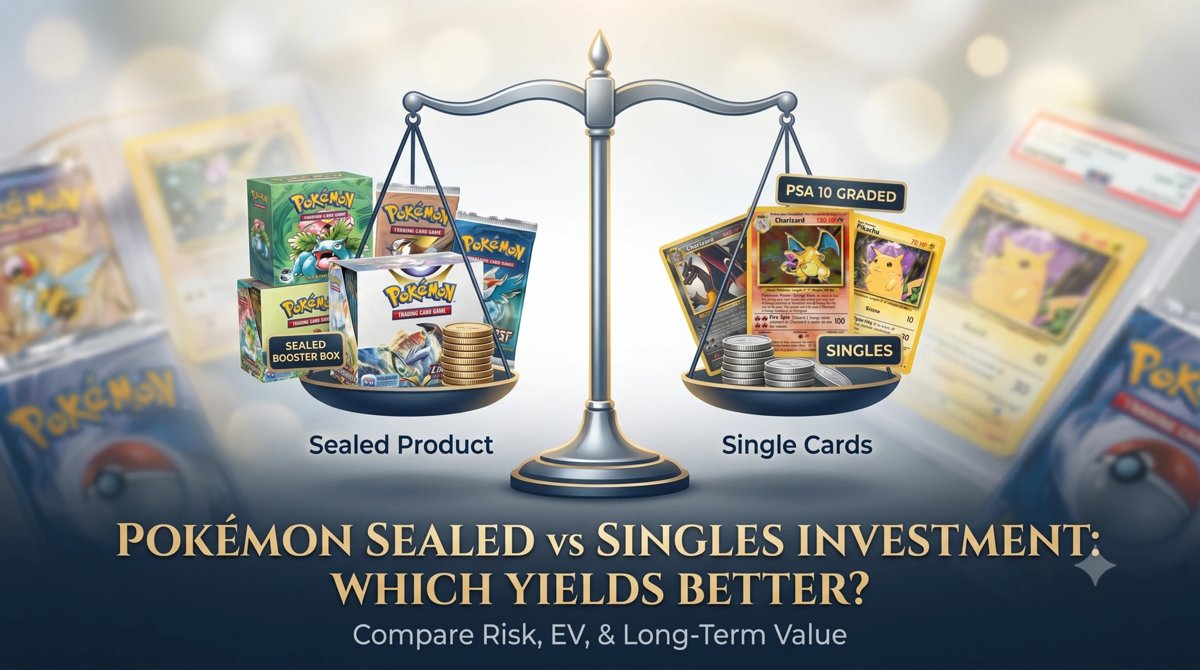
For example, a Base Set Charizard can vary dramatically in value depending on grade and condition, ranging from about $300–$500 ungraded Near Mint to $15,000+ for PSA 10 examples.
That huge difference proves one thing: price depends on what buyers actually pay — not what sellers hope to receive.
● Key Lesson
Asking Price is a wish. Sold Price is reality. To avoid the eBay trap:
- Use sold listings and verified sales data
- Compare identical conditions and language versions
- Confirm rarity before assuming value
Is your card actually rare? A proper Pokémon card value checker should always rely on sold data, not listing prices.
2. The “True Cost” Trap (Shipping & Customs)
● The Most Important Financial Lesson
When asking How to calculate profit on Pokémon cards?, most beginners only consider the purchase price. That’s a major mistake.
● The Real Formula
Card Price + Shipping + Customs/VAT + Buyer Protection Fees = Total Cost Basis
Understanding your Total cost basis is essential for tracking Pokémon collection profit and calculating real investment performance.
● Example
You see a card listed for €20 and think it’s a bargain, especially when buying Pokémon cards from Japan customs deals seem attractive.
But let’s calculate the real numbers:
Card Price: €20
Shipping: €15
Customs/VAT: €10
Your real purchase cost = €45. If you sell that card for €30, you didn’t make money; you lost €15. Do I have to pay customs for cards from Japan? In many regions, yes! Duties or VAT can apply depending on the declared value, which directly impacts profit.
● Why This Matters
Many collectors fail to consider how to factor shipping into card value, leading to unrealistic expectations and inaccurate ROI calculations.
3. The PokéFolio Solution: Real ROI Calculation
● Why Standard Tracking Fails
How to calculate profit on Pokémon cards? Spreadsheets often ignore hidden costs. Without full tracking, collectors ask, what is my real return after fees and shipping?
● The Pitch
This is exactly why PokéFolio was designed. Unlike a simple Excel sheet, the platform helps you record the True Purchase Price, including shipping, customs, and buyer fees.
● How does PokéFolio calculate ROI?
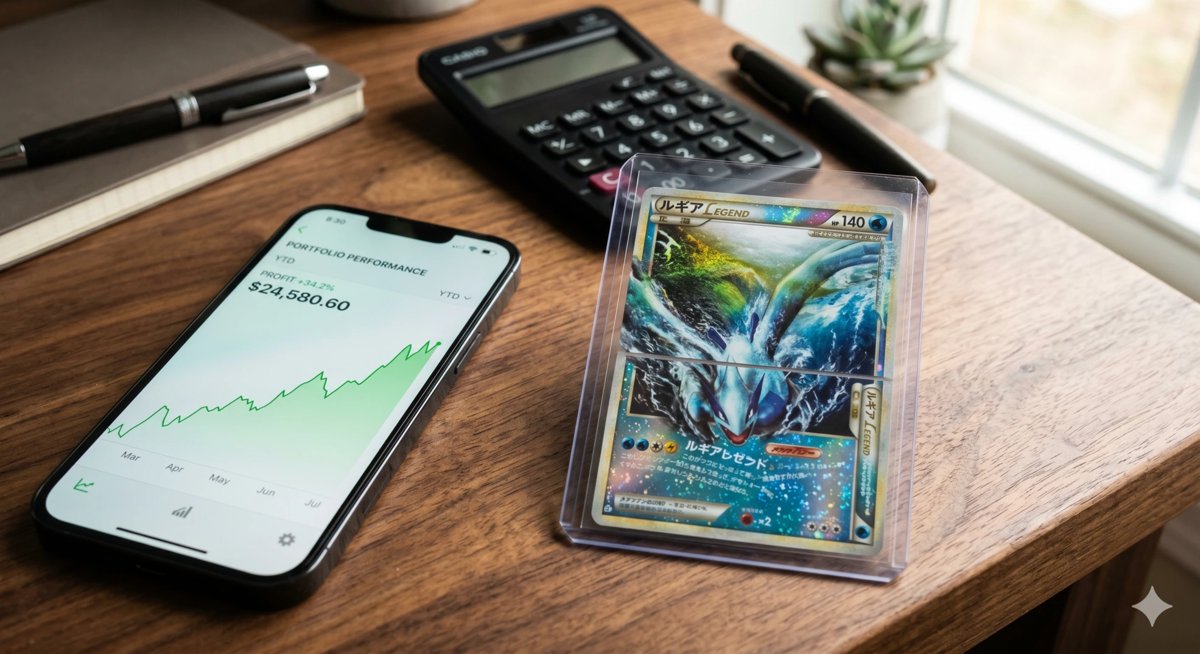
The system automatically calculates your Real ROI Pokémon cards, allowing you to see whether you’re in profit or loss instantly. And that’s by tracking:
- Purchase price
- Shipping costs
- Customs/VAT
- Grading and transaction fees
- Final sale price
● The Benefit
If you want to seriously calculate Pokémon card profit, tools like PokéFolio eliminate guesswork and provide data-driven clarity. With accurate data, you can:
- Monitor your investment performance
- Improve buying decisions
- Avoid emotional pricing
- Maintain accurate tracking Pokémon collection profit
4. The Valuation Factors (What Changes the Price?)
Card value isn’t static. Several key factors influence price, and understanding them is essential if you want realistic valuations.
● Condition
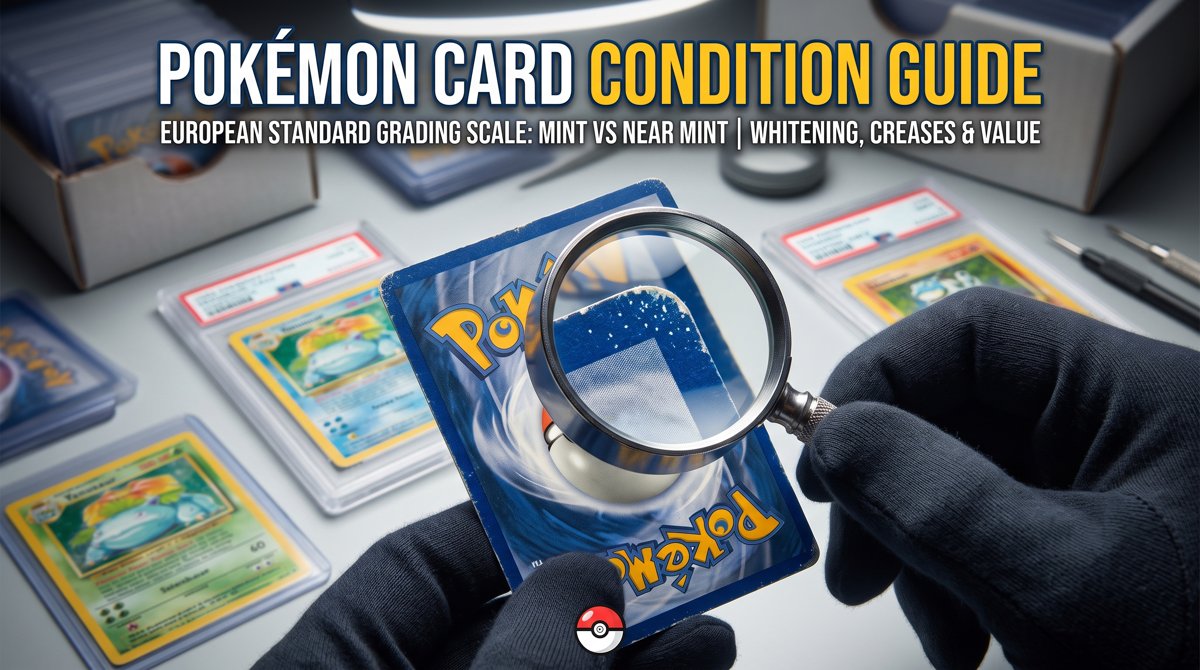
Condition is the single biggest pricing factor. Even small scratches or edge wear can drastically change value.
Before pricing, check the Pokémon card condition carefully.
Typical rough examples:
- Near Mint (NM): ~100% value
- Lightly Played (LP): ~60% value
● Language
Language impacts liquidity:
- English cards = global demand and easier resale
- French/German cards = strong local demand but slower global sales
- Japanese cards = often cheaper to buy but require customs consideration
● Grading
Grading can dramatically change value — sometimes multiplying prices several times over. Modern PSA 10 cards can sell for 2–5× raw prices, while vintage PSA 10 cards can reach 5–10× increases or more in rare cases. Grading also increases buyer trust and marketability because the condition is verified by professionals.
Learn more here: Does grading increase the Pokémon card value?
Final Thoughts
If you want accurate pricing and real investment results, remember:
- Use sold listings; not asking prices
- Always calculate the total cost basis
- Include shipping, customs, and fees
- Track performance using tools designed for Real ROI Pokémon cards
By following these principles, you’ll avoid the “eBay Trap,” and answer How to check Pokémon card value? with confidence, and finally understand the real value of a Charizard (or any card in your collection). And most importantly: your pricing decisions will be based on real data, not wishful thinking!