The Ultimate Shipping Guide: How to Ship Cards to PSA!
 Pokefolio
Master the prepare Pokémon cards for grading process with our expert guide. Learn how to ship cards to PSA safely using Card Savers and pull tabs.
There is no moment in a collector's journey more anxiety-inducing than handing over a package containing thousands of Euros' worth of cardboard to a courier. You’ve spent years hunting for that pristine Charizard or Lugia, and now its fate lies in the hands of logistics networks. However, shipping damage is almost entirely preventable with the right preparation.
Whether you are submitting to a local European firm or the new PSA Germany grading facility, the standard for protection remains the same. If you want to prepare Pokémon cards for grading like a professional, you must move beyond the basic storage methods used for casual play. This guide provides a foolproof, step-by-step tutorial on the industry-standard packing method to ensure your cards arrive at the grading desk in the exact condition they left your hands.
In this guide:
- 1. The Mandatory Supplies (The Shopping List)
- 2. The Step-by-Step Packing Tutorial
- 3. Insurance and Courier Choice in Europe
- FAQ: How to Ship Cards to PSA
1. The Mandatory Supplies (The Shopping List)
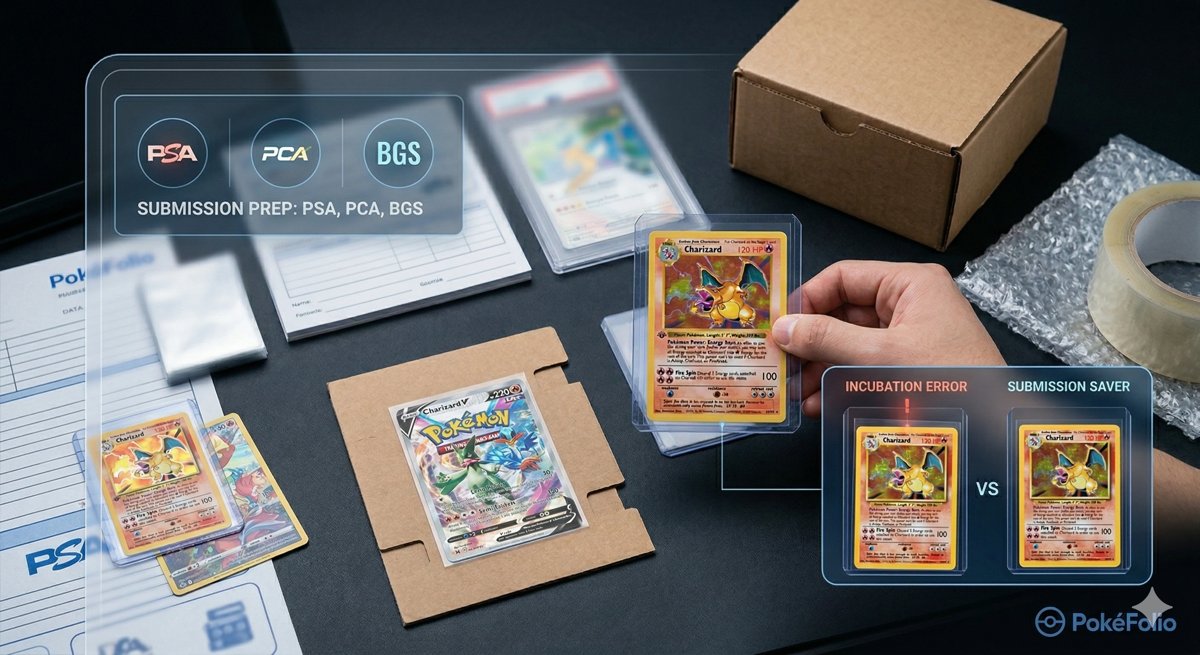
Before you even touch your cards, you need the right tools. Using the wrong materials, like dirty sleeves or rigid holders that are too tight, can actually lower your grade before the card even reaches the office. If you are wondering "How do I prepare my Pokémon cards for PSA grading?", it starts with this specific shopping list:
- High-quality Penny Sleeves: Always use brand-new, clear sleeves. Avoid "deck protectors" with matte backs or tight-fitting "perfect fit" sleeves, as these can put unnecessary pressure on the card edges during insertion.
- Semi-Rigid Holders (specifically Card Saver 1s): This is the single most important item. You might ask, "What is a Card Saver 1?" It is a slightly flexible, oversized plastic holder.
- The Card Saver vs Toploader grading debate: While toploaders are great for storage, grading companies loathe them. Toploaders are wide enough that a card can slide around or even "pop out" of the top during transit vibrations. A Card Saver "pinches" the card securely in place, ensuring zero movement.
- Post-it Notes (for pull tabs): Standard small sticky notes are essential for creating "easy-access" points for the graders.
- Sturdy Cardboard Cutouts: You need two pieces of thick, corrugated cardboard slightly larger than the Card Savers.
- Rubber Bands & Bubble Wrap: For the final "sandwich" and internal box padding.
- A Sturdy Cardboard Box: Never, under any circumstances, ship high-value cards in a bubble mailer or a paper envelope.
2. The Step-by-Step Packing Tutorial
How to pack Pokémon cards safely for mail? Follow these steps precisely. Graders handle thousands of cards a day; if your card is easy and safe for them to remove, you reduce the risk of "accidental handling damage" at the facility.
Step 1: The Sleeve & Tab
Place your card into a fresh penny sleeve. Take a small Post-it note and stick about 1cm of it to the back of the penny sleeve (not the card itself!), leaving the rest of the note sticking out of the top. This creates a "pull tab." How to use pull tabs for Pokémon cards is a skill every submitter should master; it allows the grader to pull the sleeve out of the semi-rigid holder without having to reach in with their fingers or shake the holder, both of which can cause surface scratches.
Step 2: The Semi-Rigid
Carefully slide the sleeved card (with the tab) into the Card Saver 1. Do not force it. If the card feels stuck, gently tap the bottom of the Card Saver on a table to let gravity assist the card into a centered position. Most collectors ask, "Do you need Card Savers for grading?" The answer is yes, most major companies, such as PSA and PCA, specifically request them in their submission guidelines.
Step 3: The Cardboard Sandwich
How to make a cardboard sandwich for shipping cards? The Cardboard Sandwich. The Card Savers need to be prepared first before you can start stacking them in groups, which typically contain five to ten cards. The stack needs to be positioned between two thick pieces of cardboard. The Cardboard Sandwich serves as a protective barrier that prevents the stack from bending or being crushed. The sandwich needs to be secured with two rubber bands, which should be applied in opposite directions: one band should go across the sandwich, while the other should move from top to bottom. The process of making a cardboard sandwich for shipping cards safely requires users to adjust the bands until they reach an exact level that keeps the boards secured while avoiding excessive pressure that could cause cardboard deformation and damage to the cards inside.
Step 4: Bubble Wrap & Boxing
Your shipping box should contain your cardboard sandwich, which needs to be wrapped in bubble wrap until it reaches a thickness that resembles a small burrito. Your shipping box should contain this item. The remaining empty spaces should be filled with packing peanuts or crumpled paper. The process of packing Pokémon cards for mailing protection requires that the box remain completely silent when shaken because nothing inside should produce any sound.
3. Insurance and Courier Choice in Europe
Once the box is sealed, the final hurdle is the courier. Shipping within Europe has become significantly more streamlined, but you must choose your service wisely based on value.
- Declaring Value: When you ship cards to PSA or local graders, you must declare the "Raw Replacement Value." This is what it would cost you to buy the card again in its current condition if the package were lost. Do not under-declare to save on shipping costs; if the package disappears, the courier will only reimburse you for the declared amount.
- Courier Choice: For high-value items (above €500), avoid standard national postal services (like La Poste, Deutsche Post, or Royal Mail) for the final leg. These often have low insurance ceilings. Instead, opt for DHL Express or UPS. These couriers offer "White Glove" tracking and higher insurance tiers specifically designed for collectibles.
- Shipping insurance for Pokémon cards Europe: Always check the fine print. Some couriers exclude "paper collectibles" or "securities" from their standard insurance. If your cards are worth thousands, look into third-party collectibles insurance (like Secursus), which provides specialized coverage for shipments within the EU.
FAQ: How to Ship Cards to PSA
How do I prepare my Pokémon cards for PSA grading?
Follow the "Sleeve + Pull Tab + Card Saver" method. It is the only method PSA officially recommends to ensure the safety of your card.
Can I send cards to PSA in toploaders?
Technically, they will accept them, but they strongly discourage it. Using toploaders increases the risk of the card sliding out and hitting the top of the package, and it slows down the grader, which can lead to longer processing times for your order.
How to safely ship valuable Pokémon cards?
Double-box if necessary. Place your bubble-wrapped "sandwich" inside a small box, and then place that small box inside a medium box with more padding. This provides a "crumple zone" in case of heavy impacts.