Resealed Pokémon Pack Guide: Spot the Scam Before Opening?
 Pokefolio
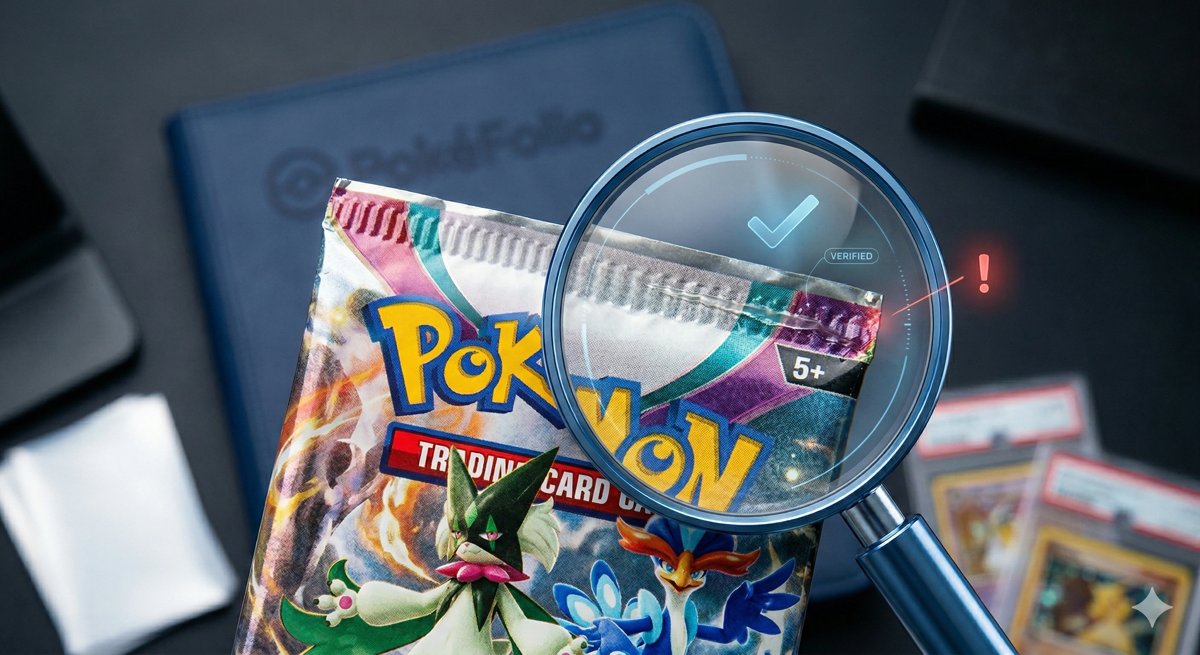
Learn how to spot resealed booster packs with this Resealed Pokémon pack guide, covering crimp checks, glue residue signs, and factory error vs scam tips.
Buying Pokémon booster packs should be exciting, but for many collectors, especially beginners and parents, that excitement turns into suspicion. Was the pack already opened? Were the good cards removed? Why does it feel… off? This Resealed Pokémon pack guide explains exactly how to tell if a Pokémon pack has been opened, how scammers operate, and how to separate bad factory quality control from intentional booster tampering.
In this guide:
- 1. The Concept: Why Reseal?
- 2. Visual Signs (The “Crimp” & Glue)
- 3. Physical Tests (The Touch)
- 4. The “Code Card” Proof (After Opening)
- 5. Real vs Resealed Comparison - What Does a Resealed Pack Look Like?
- 6. The Verdict: Avoid Loose Packs?
- Final Takeaway
1. The Concept: Why Reseal?
The Scam Explained
Resealing is one of the oldest tricks in the Pokémon TCG world. Here’s how it usually works:
- The scammer carefully opens a booster pack
- They remove the “hit” (Ultra Rare, Full Art, Secret Rare)
- They replace it with a worthless bulk card, or even fake cards!
- The pack is glued or heat-manipulated shut
- It’s resold as “new” or “unopened”
The end result? A pack that looks sealed, but contains no real chance of pulling something valuable. Understanding this is critical to How to spot resealed booster packs effectively.
The “Weighing” Context
Pack weighing plays a major role in resealing scams.
- Heavier packs historically had higher odds of containing holo or ultra-rare cards
- Scammers weigh packs, open the heavy ones, and reseal or discard them
- Light packs (with no hits) are sold as “loose packs”
This is why topics like Pokémon card weighing 2026 still matter, even though modern sets have improved randomness. A common question today is: Can you weigh Scarlet & Violet packs? Not reliably. Code cards and energy cards add variability, but scammers still try, especially with loose packs.
2. Visual Signs (The “Crimp” & Glue)
Visual inspection is your first line of defense against resealed packs.
The “Crimp” (Zigzag Seal)
The crimp is the zigzag seal at the top and bottom of the pack.
Real Packs
- Machine-pressed, sharp zigzag pattern
- Uniform across multiple packs
- Often includes tiny “air holes” (era-dependent)
Knowing how to check crimps on Pokémon packs is essential for spotting inconsistencies.
Resealed Packs
- Puffy or uneven crimps
- Flattened areas (often from an iron or heat source)
- Zigzags that look melted or partially erased
This is one of the clearest Pokémon booster tampering signs.
The Glue Residue
Many collectors first notice resealing by asking: Why is there glue on my booster pack? Important rule: Factory-sealed Pokémon packs do NOT use liquid glue. This is classic Glue residue on Pokémon packs, and it almost never comes from the factory.
Red Flags
- White residue at the corners
- Shiny spots resembling superglue
- Sticky or hardened patches
The Back Flap
The back seam of the pack is another giveaway.
Real
- Heat-sealed, not glued
- Can often be lifted slightly
Resealed
- Cemented flat and stiff
- OR peeling open because the glue failed
If the back flap feels “locked down,” be suspicious.
3. Physical Tests (The Touch)
Once the pack passes a Pokémon Pack visual check, it’s time to use your hands.
The “Card Slide” Test
This test is simple but effective. If the cards don’t move, the pack has almost certainly been opened.
Real Pack
- Cards slide up and down slightly inside the wrapper
Resealed Pack
- Cards feel stuck
- The wrapper may cling to the cards because the glue leaked inside
The Air Test
Air distribution inside the pack matters.
Resealed Packs Often Feel
- Vacuum-tight (air pushed out during resealing)
- OR extremely puffy and uneven
Real packs usually feel balanced, not overly tight or balloon-like.
4. The “Code Card” Proof (After Opening)
This is the definitive proof of resealing, but it requires opening the pack.
How Code Cards Work
- Older sets: Green vs White code cards
- Modern Scarlet & Violet sets: Black-bordered code cards with standardized hit ratios
The system ensures consistency between the code card and the rarity slot.
The Resealing Red Flag
If you open a pack and:
- Pull a “hit” code card
- But the rare slot contains a non-holo common or uncommon
That pack was manipulated. This scenario answers questions like: Is my Silver Tempest pack resealed? If the code card doesn’t match the contents, yes—it was swapped.
5. Real vs Resealed Comparison - What Does a Resealed Pack Look Like?
| Feature | Real Pokémon Pack | Resealed Pokémon Pack |
|---|---|---|
| Sealing Method | Heat-Pressed, Clean | Glue Residue, Messy |
| Wrapper Fit | Loose, Flexible | Tight or Torn Corners |
| Crimp | Sharp Zigzags | Flat or Melted |
| Opening Feel | Pops Open Cleanly | Sticky or Foil Tears |
6. The Verdict: Avoid Loose Packs?
The Risk
Is it safe to buy loose booster packs on Amazon? Buying loose packs from unknown sellers is the highest-risk purchase in the Pokémon TCG.
- Yes, only when sold and shipped directly by Amazon or trusted retailers
- No, from third-party sellers with no Pokémon specialization
The Safer Alternative
If you want single packs:
- Buy sleeved boosters
- Buy blisters or 3-pack bundles
These are far harder to reseal without destroying the outer packaging. This is why collectors prioritize Safe places to buy loose Pokémon packs, such as:
- Local Game Stores (LGS)
- Pokémon Center
- Major retailers (direct stock only)
Factory Error vs. Resealed Pack
This distinction matters.
Factory Errors Can Include
- Slightly uneven crimps
- Minor print misalignment
Scams Include
- Glue residue
- Stuck cards
- Code card mismatch
A single flaw doesn’t guarantee tampering—but multiple signs together almost always do.
Final Takeaway
Resealed Pokémon packs leave fingerprints. By checking crimps, glue residue, air balance, and card movement, you can confidently detect tampering and avoid scams. Knowledge (not luck) is your best pull.