Explained: Why Do Pokémon Cards Curl? (And How to Fix It)
 Pokefolio
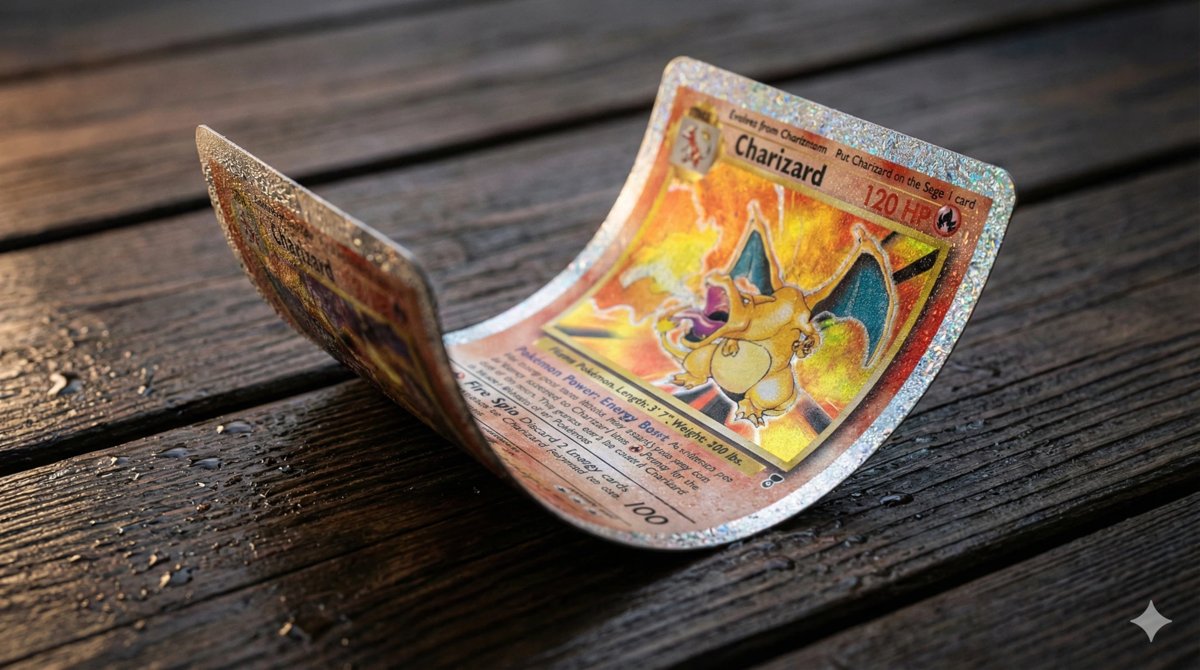
Why Pokémon cards curl and warp, how humidity, extra heat, and sunlight cause damage, and proven ways to fix curved cards and protect long-term value safely. Collectors and professional Pokémon card traders need to learn the reasons behind this specific problem because it serves as the basis for maintaining their valuable belongings.
The guide shows the reasons behind Pokémon card curling, together with the effects of humidity and sunlight on card damage, and provides collector-safe methods to restore bent Pokémon cards.
Why Do Pokémon Cards Curl or Bend? (The "Pringle Effect")
The Science Behind Card Curling
Modern Pokémon cards are made of multiple layers:
- A paper/cardstock core
- A foil or printed front layer
The different materials show distinct expansion and contraction patterns because humidity and temperature changes affect their moisture absorption. The card bends because paper expands through humidity absorption at a faster rate than foil. The paper in extremely dry conditions shrinks more than the foil, which causes the paper to curl in the opposite direction.
"This phenomenon is known to collectors as the 'Pringle Effect.' The slightest humidity variations produce slow card deformation, which affects especially holo, reverse holo, and full-art cards."
Is Humidity Bad for Pokémon Cards?
Yes! Humidity is the number one environmental enemy of trading cards. When moisture levels rise:
- Paper fibers absorb water and swell
- Cards warp or curl
- Mold and mildew can develop
- Older card adhesives may weaken
Ideal Humidity Range
What is the ideal humidity level for a card collection?
The ideal humidity level for a card collection is 35%-55% relative humidity (RH). Stable humidity matters more than perfection.
- Above 60%: warping, mold risk
- Below 30%: brittleness and cracking
Does Moisture Ruin the Value of a Pokémon Card?
Moisture damage doesn't always destroy value immediately, but it kills buyer confidence. Visible mold, stains, or severe warping will permanently damage the condition and desirability. Even mild warping can:
- Lower eye appeal
- Reduce resale value
- Make buyers hesitant
- Affect grading outcomes for premium cards
How to Fix Curved Pokémon Cards (Safely)
If your cards are already curled, don't panic. Curling caused by moisture imbalance is often reversible.
1. Use Silica Gel for Trading Cards
Silica gel absorbs excess moisture and slowly rebalances humidity, allowing cards to flatten naturally over time. Place silica gel packets inside:
- Storage boxes
- Binders
- Display cases
2. Control the Room Environment
Cards stored in a stable room (moderate temperature, controlled humidity) often flatten on their own within weeks.
What Not to Do
- No heat
- No water sprays
- No microwaves
These methods permanently damage cardstock.
How to Protect Pokémon Cards from Sun Damage?
Sun Damage Pokémon Cards Explained
UV light destroys printed inks over time. Reds fade first, often turning yellow or dull within weeks of exposure. Damage is permanent and irreversible. Sun damage happens when cards are:
- Displayed near windows
- Stored on open shelves
- Exposed to strong indoor lighting
Do Graded Slabs (PSA/BGS) Provide UV Protection?
Graded slabs offer excellent physical protection, but standard PSA and BGS slabs do not reliably block UV light on their own. For collectors displaying slabs:
- Use UV-protective display cases or archival UV glass
- Combine grading with light protection for the best results
(For a full breakdown of grading and slab protection, see our Grading Intro guide.)
Storage Location Matters More Than You Think
The proper storage methods function as the hidden protector of all Pokémon card collections. Cards that receive perfect sleeve protection will still develop curling, fading, and yellowing when they exist in improper storage conditions. The combination of temperature changes, moisture buildup, and improper storage locations will gradually harm cards until their damage becomes noticeable at the point of no return. The selection of an appropriate storage area holds equal importance to the use of sleeves and binders for collectors who want to maintain their collection's worth and keep their items in pristine condition.
Never store Pokémon cards in:
- Attics (too hot, extreme swings)
- Basements (too damp, mold risk)
Best Storage Location
Proper storage prevents most curling and fading issues. A climate-stable room inside the home with:
- Moderate temperature
- Controlled humidity
- No direct sunlight
Final Takeaway: Protect to Preserve
How to prevent Pokémon cards from yellowing? Collectors who want to preserve their Pokémon card collection in perfect condition must understand why Pokémon cards develop curling problems. Most Pokémon card damage occurs because of environmental conditions, which include humidity, heat, and UV light, that damage the cards more than any physical contact.
- Control humidity (35-55% RH)
- Use silica gel for trading cards
- Avoid sunlight and improper display
- Store cards in stable environments
- Combine grading with UV-safe display solutions
How to fix curved or warped Pokémon cards? Use silica gel for trading cards, store them properly, and keep them away from the three invisible enemies mentioned!