Organizing Pokémon Cards: 4 Ways to Organize Your Collection
 Pokefolio
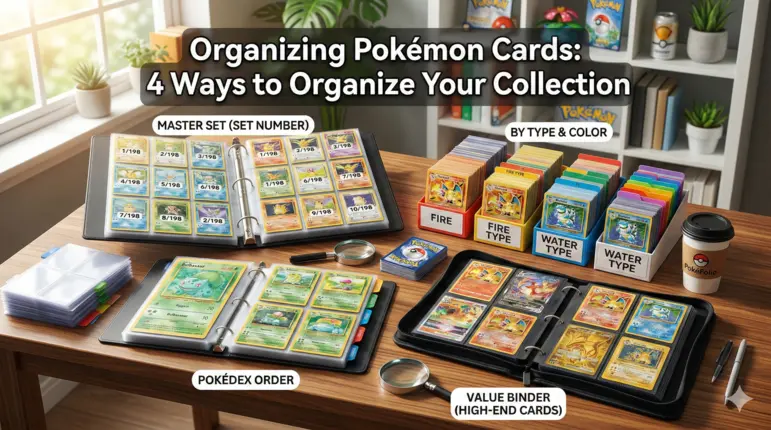
Organizing Pokémon cards the right way starts with choosing the best method. Learn how to sort Pokémon cards using Master Sets, Pokédex order, or value binders.
The process of arranging Pokémon cards requires more than just using neat binders because it serves two purposes. The process of organizing Pokémon cards should meet your needs for collection because you need different ways to track your complete collection, your nostalgic items, and your favorite artworks. The article presents three common methods of organizing Pokémon cards, which enables you to select the most suitable method together with instructions for safe Pokémon card organization. If you are wondering, How to track my Pokémon card collection? This article explains the best 4 methods.
Method 1: By Set Number (Master Set Collecting Guide)
What Is a Pokémon Master Set? Master Set collectors use set number organization as their fundamental method to categorize Pokémon cards. The method uses official numbering, which begins at 1/xxx and ends with the last secret rare to help collectors understand what a Pokémon Master Set contains and to enable them to track their completion progress. A Pokémon Master Set includes every card released in a specific set, typically:
- All numbered cards (e.g., 1/198 to 198/198)
- All reverse holos
- All secret rares and promos tied to that set
Do Master Sets Include Reverse Holos? Yes! A true Master Set includes both the regular and reverse holo versions of every applicable card. This is the gold standard for completion-focused collectors and graders.
How to Complete a Pokémon Master Set?
- Sort cards strictly by set number
- Track missing cards individually
- Buy singles to fill gaps instead of opening endless packs
Pros
- Extremely satisfying
- Easy to see what’s missing
- Clean, professional binder layout
Cons
- Requires buying specific singles
- Some cards can be expensive or hard to find
Method 2: National Pokédex Order
Sorting Pokémon cards by National Pokédex number focuses on the Pokémon themselves instead of their corresponding set. This approach works best for anime fans who want to organize Pokémon cards from Bulbasaur #001 to the newest generation in a nostalgic, story-based order. The method operates most effectively with binders that people use to reorder their contents throughout the day. It organizes cards by Pokédex number, starting with:
- Bulbasaur #001
- Ending with the latest Generation 9 Pokémon
Pros
- Incredible nostalgia
- Perfect for anime and lore fans
- Great storytelling flow
Cons
- You’ll need to shift cards every time a new generation releases
- Requires flexible binder spacing
Method 3: By Type or Color
Organizing Pokémon cards by type or color groups, all Fire, Water, Grass, Psychic, and other types together. The method creates a visually appealing system to arrange Pokémon cards, which casual collectors and younger fans prefer because they find it visually attractive despite their incomplete collection. The main focus of this system lies on creating pleasure for users rather than achieving accurate results. Some collectors prefer pure visual organization:
- Fire types together
- Water types together
- Psychic, Dark, Dragon, etc.
This is especially popular for:
- Kids
- Casual collectors
- Display-focused binders
Pros
- Visually appealing
- Easy and intuitive
- No pressure to complete sets
Cons
- No market or grading structure
- Harder to track collection progress
Method 4: The “Value Binder”
The Value Binder method separates high-end cards from bulk card collections. The system serves collectors who want to preserve their collection value through Pokémon card organization, which protects their cards while showing them off and maintaining them for future use. Premium binders store high-value cards while boxes provide secure storage for bulk items. The Value Binder is for collectors who only care about:
- Ultra Rares
- V, ex, GX
- Alt Arts
- Full Arts and Secret Rares
Pros
- Maximum protection for valuable cards
- Clean, high-end presentation
- Easy to upgrade over time
Cons
- Bulk still needs proper storage
- Not completion-focused
This method pairs perfectly with side-loading or toploader binders designed for protection (see our binder guide for recommendations).
Conclusion: Organize With Purpose
Is it better to collect Master Sets or single cards? The process of organizing Pokémon cards requires collectors to select their preferred system of organization, which matches their unique style of collecting.
"The appropriate system protects your enjoyment and card value, whether you build a perfect Master Set or watch anime through the Pokédex or display your best cards."
The method you should select must maintain your excitement while protecting your cards. The ability to remember things becomes harder when collections expand. The process of tracking information starts to become vital. A proper tracking system lets you:
- See what you own
- Identify missing cards
- Avoid accidental duplicates
- Plan purchases efficiently
Which Collector Are You? Before choosing a system, ask yourself why you collect:
- Do you love completion? Master Set collecting
- Do you love the Lore/Anime? National Pokédex order
- Do you only care about the best art? Value Binder
Read the next article! How to re-organize a large Pokémon collection without damaging cards?